Tips and tricks: Reviews
|
When researching a certain topic, one may even become aware of the trends in the field of study. At this stage you could even be called an 'expert'! In this position, you may find yourself in the position to write a review. Accordingly, some tips 'n tricks below on writing a review article.
These build on the tips and tricks given in the article section, which you can go to using the following link: |

|
|
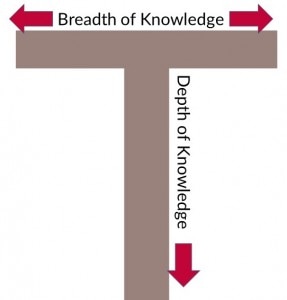
Type: broad versus deepGenerally speaking, two types of reviews exist: those that tackle a broad area in which a large of number of topics are touched upon only briefly. On the other hand, there are those focussing more a narrower area, but giving a lot more details. Both have their advantages. However, for 'fresh' PhD students it may be easier to start with an in depth review...
|
|
TimingThe timing of a review depends on the need, the type, and the activity within the field. For an actieve field, broad reviews with a lot of new contributions can be written relatively often. However, depth reviews may be less frequently written (for example, every 4 year or so...)
|
|

|
|
SkeletonLike for the article, the planning of the review is very important. Moreover, as the review does not contain any (new) data, the planning is less easily dictated by the figures of the experimental results. Accordingly, pay extra attention to think about the skeleton of the paper...
|
|

|
Lead authorA review is best written by a single person. This gives the most consistent and homogeneous writing. In reviews with multiple authors try to delegate such that these aspects are preserved. For example, one lead writer, one responsible for the figures, one taking lead on the skeleton, etc. etc.
|
New figuresWhen experienced in a field, you may find yourself with general impressions that are never really displayed anywhere. These are very valuable and just the type of material suited for a review! Ideally, try to formulate them visually in figures. Even more elegant is to quantify the trend using readily available data from the literature!
|

|
|
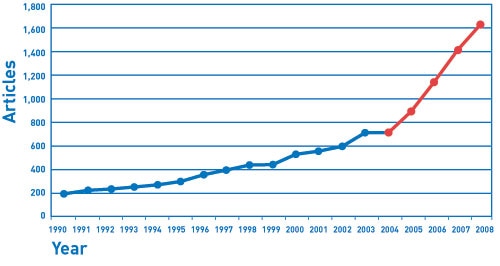
Number of publications in timeThe number of articles on a certain topic is often used to highlight the importance of a field. Be aware that this is a bit of a trap! The number of scientific articles has in general sky rocketed. Hence such graphs do not really add anything. Instead, try to highlight the (potential) value of your work by more tangible criteria such as global yearly turnovers, market shares, possible value to the market etc.
|
Figures over TablesWhen summarizing data, both tables and figures can be used. However, tables do not have the ability to visually highlight a trend compared to figures. Try to put therefore as much data as you can in comprehensive figures.
|

|

|
Digitalize figuresWhen using figures from existing work, you will find that it is very hard to copy them in a high quality fashion. Instead, try to re-plot the data in your own graph! This yields a higher quality image, and the style can be tuned to the other figures...Moreover, you will not need the permission as you did not copy they graph but simply used their data!
|
Review: do not summarizeA good review sheds a fresh light a number of contributions to the field. It should give a critical, consistent, and coherent overview. Accordingly, try to avoid simply summarizing the interpretations of others. After all, one could simply read the abstracts of those works instead. This is particularly challenging when writing a broad review (instead of a deep one).
|

|

|
Critical but correctIn reviewing other people's work, it is important to be critical and not simply take over conclusions without reassessment of the the data. However, when pointing out possible weakness of a paper, be correct. You could also highlight the strengths of that paper. Realize that once published, it cannot be undone. Ask an experienced scientist for feedback if you are not sure...
|
Raise questionsIf you notice that things are systematically neglected within a field, you can mention this. This is an important part of the reviewing process. Of course, if the idea/question represents a possible avenue of new research, make sure first whether you cannot research it yourself before writing about it...
|

|

|
Patent literaturePatent literature can be extremely relevant, as they are often written by big companies, which have no use for unrealistic approaches. It is accordingly a good manner to evaluate whether your type of research may be (at least on the short term) commercially attractive. In addition, the scientific problems occurring in real life are often very well described in the patent backgrounds. Use for example www.freepatentsonline.com to explore.
|
Respect your elders: dig deep!When introducing the topic, try to look for the pioneers in the field. Especially nowadays with the impressive amounts of papers coming out, it could happen that people are reinventing the wheel. To get on top of this you need to dig up the old works. Websites like sci-hub can be useful here...
|

|

|
Ambitious and positive outlookEven if you do not always agree with the views of your peers, try to keep the tone in general positive and ambitious. Merely the fact that so many people are working on a similar topic, (often) highlights the relevance of the work.
|
ReferencesAll cited work ends in the reference list. For a deep review you may typically end up with about 100 citations, implying you can include them all. However, for a broad review you may end up with 400 or more works in total. In this case you may want to cite more selectively. Of course, make sure you are choosing them objectively to stay 'politically' correct.
|

|

|
PermissionsWhen you are copying figures and artwork from published works you will need to get the permission. For scientific review papers this is often for free and can be easily done online at the websites of the Publishers.
|
Personal ExamplesA few deep and broad reviews in which some of the tips and tricks were used can be found below.

|
| ||||||||||